By Tín Nguyễn Đăng • Written date: 08/31/2025 16:11:42
Related Insights
Was this content helpful to you?
This note outlines how the core hybrid architecture connects ReactJS and NextJS into one structured frontend system. It focuses on shared contracts, routing behavior, data flow, and performance control inside the platform.
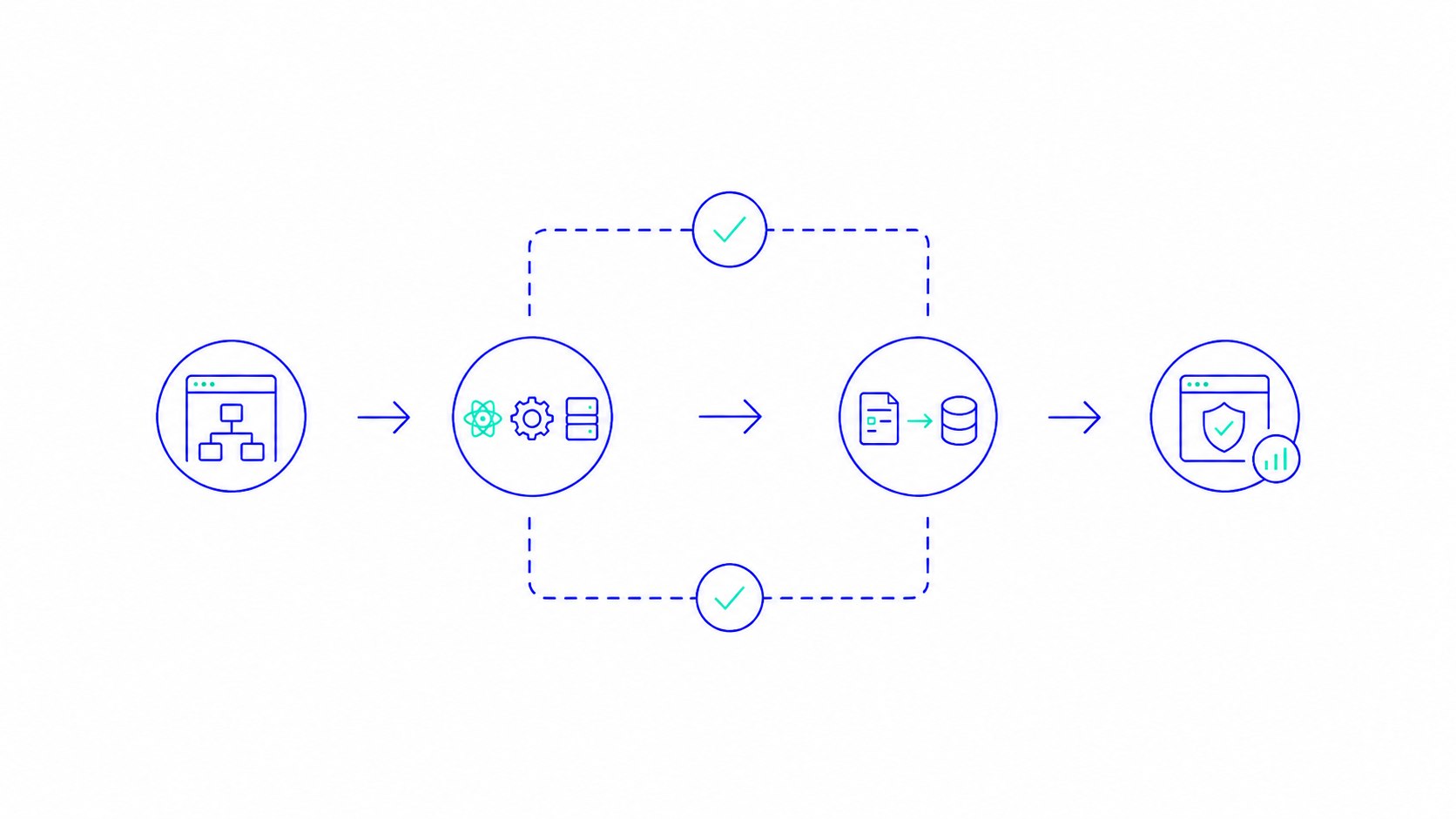
Core Engine implements a Hybrid UI Architecture based on the principle of "one logic, two presentation layers." ReactJS handles high-interaction workflows and real-time UX, while NextJS serves SSR/SSG entry points to optimize SEO and first paint. Both UI layers share the same Unified Data Contract, ensuring consistent rendering behavior without duplicating business rules.
Key principles:
Unified Data Contract (sample):
{
  "id": "mission_4821",
  "type": "p2p_task",
  "status": "processing",
  "payload": { "target": "tiktok", "action": "follow" },
  "meta": { "ttl": 300, "version": "v2" }
}
Data flows through the API Gateway and Realtime Bus (MQTT/WebSocket), and is normalized before entering the state store to maintain low Real-time Latency and synchronized UI updates.
flowchart LR
  U[User] -->|Public Entry| N[NextJS SSR/SSG]
  U -->|Interactive Flow| R[ReactJS SPA]

  N -->|Unified Data Contract| API[Core API]
  R -->|Unified Data Contract| API

  API --> BUS[Realtime Bus: MQTT/WebSocket]
  BUS --> NORM[Normalize + Schema Validate]
  NORM --> STORE[State Store]

  STORE --> R
  STORE --> N
Dual Routing Mechanism:
if (route.public) -> Next Router (SSR/SSG)
else -> React Router (SPA micro-flows)The system applies a 2-Layer Caching Strategy to optimize throughput:
cache.l1.get(key) -> render immediate
cache.l2.get(key) -> warm SSR payload
Optimization highlights:
CLOSING NOTES
Reader Value
Readers can use this model to understand how one frontend architecture can support both high-interaction flows and public entry points without splitting business logic. In real projects, that helps keep rendering behavior more consistent, reduce duplication across UI layers, and support more stable operation as frontend complexity grows.
Conclusion
This architecture combines shared contracts, dual routing, and controlled data flow into one hybrid frontend layer. It keeps the platform aligned with System Integration and Stable Operation across both SPA and SSR paths.