By Tín Nguyễn Đăng • Written date: 05/01/2025 19:12:45
Related Insights
Was this content helpful to you?
This workflow belongs to the validation layer of a web platform. It sits before deeper processing and controls how records are checked, filtered, and moved forward. You usually meet it when a website receives many records or user inputs that need consistent validation before later service flows.
- Technical context: This workflow covers input evaluation, automated validation, and quality control before deeper processing.
- Technical benefit: It improves record consistency, reduces unstable input states, and supports cleaner downstream flow.
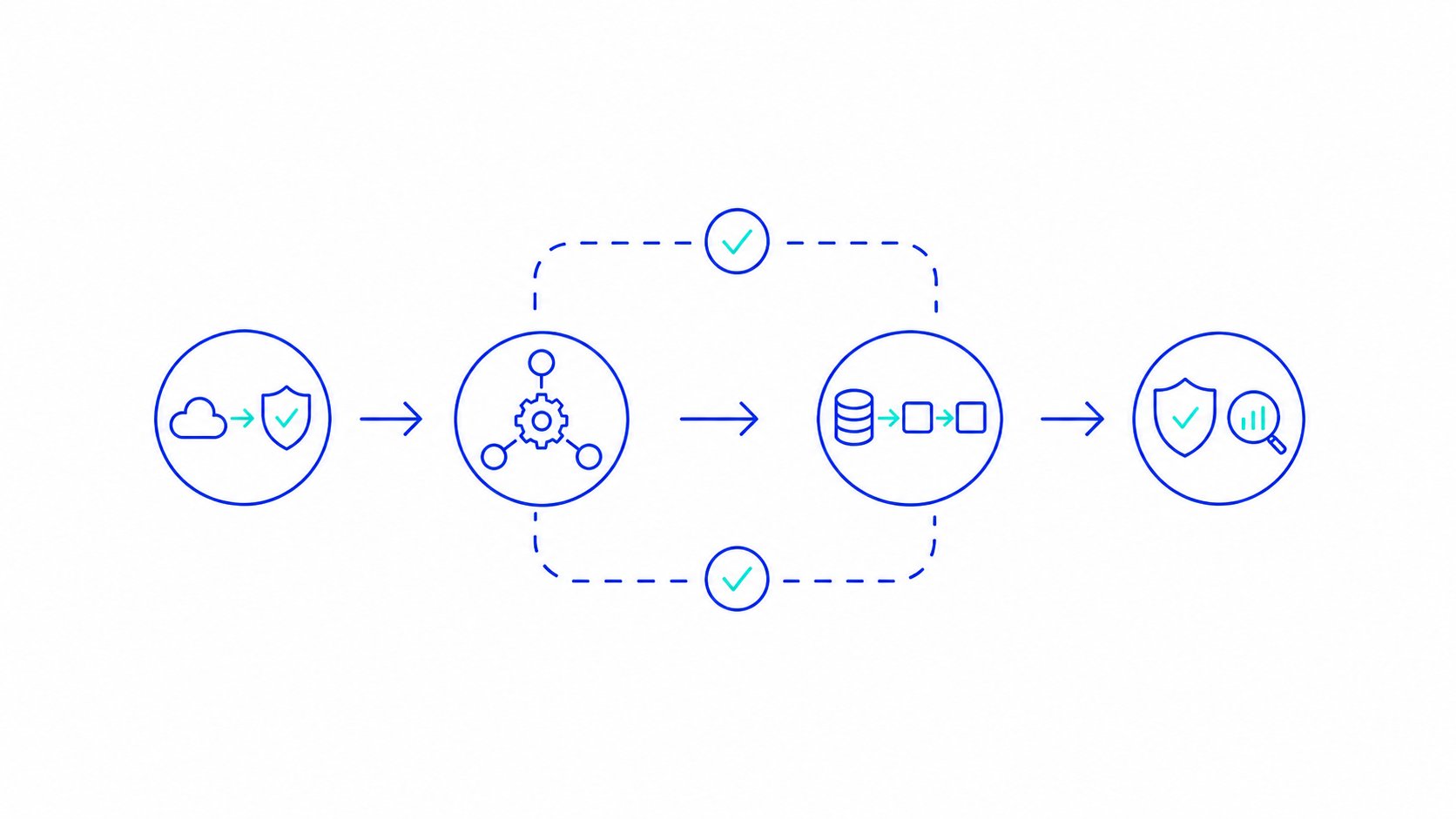
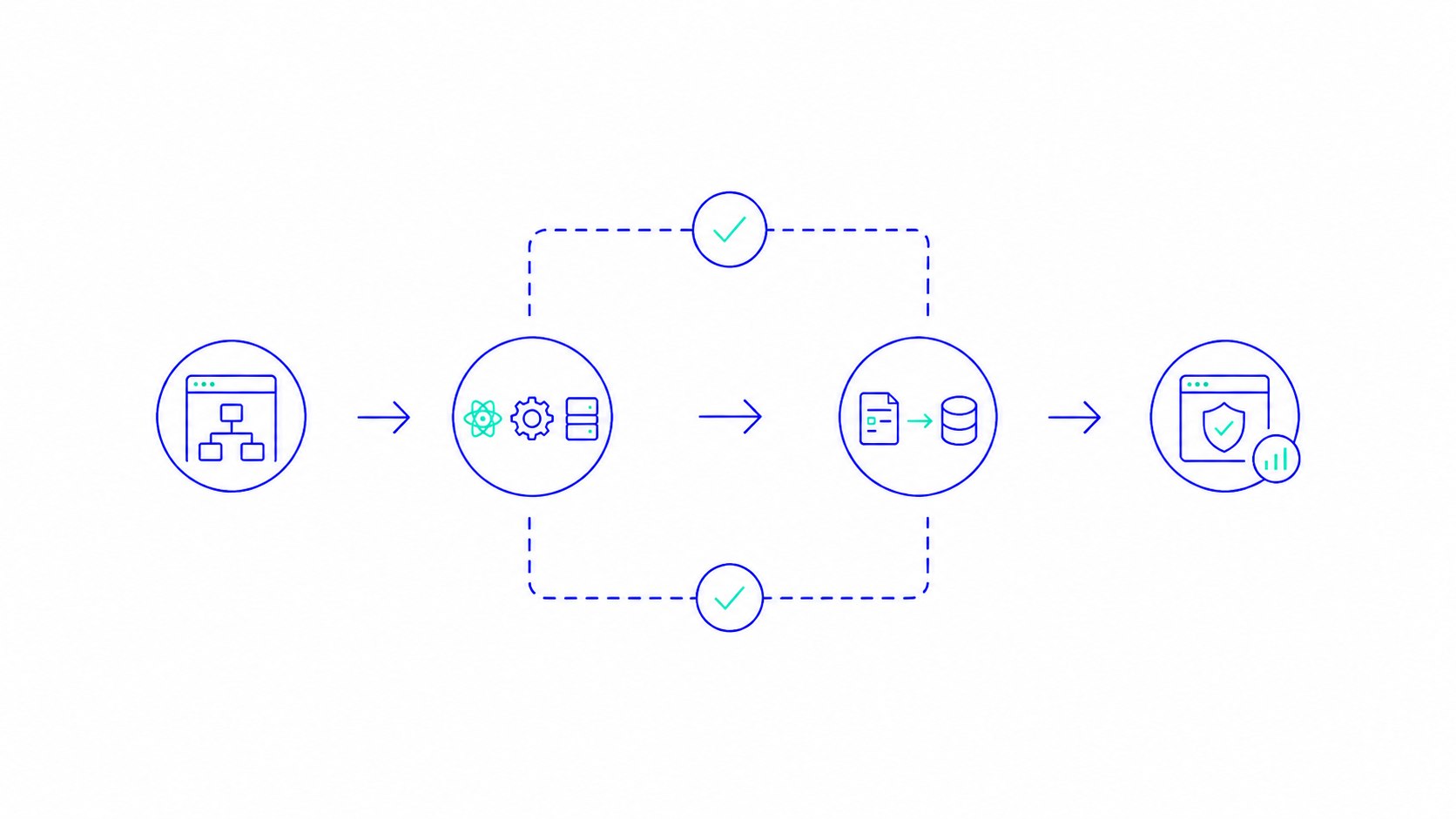
At the beginning of 2025, after entering a new relationship, I became more focused on keeping the system stable because I had less time to manually review large amounts of user input. That led me to build a more structured validation workflow so records could be checked earlier, filtered more consistently, and moved forward more safely. The diagram below shows the workflow more clearly.
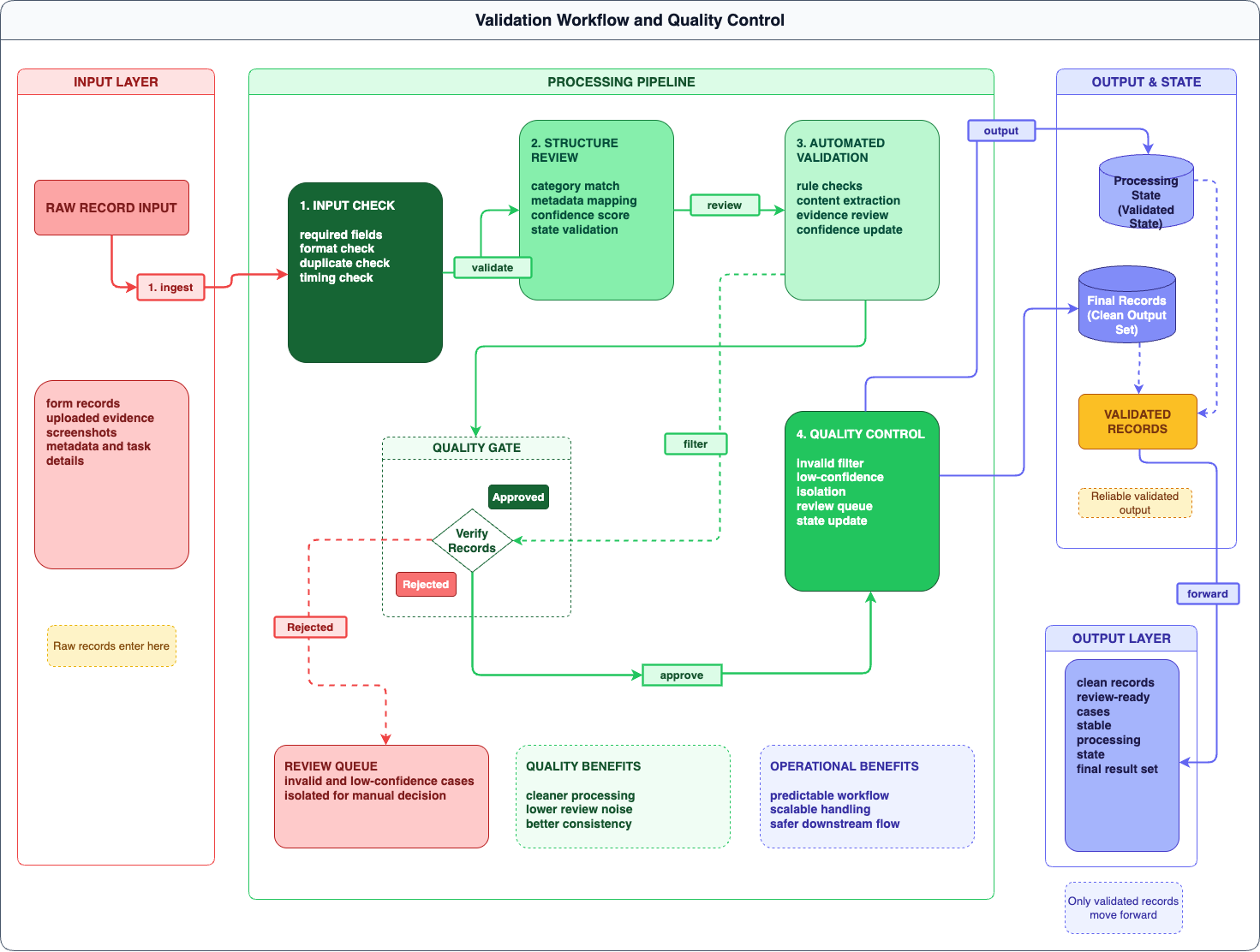
After this brief technical overview, the first layer to examine is the input stage.
Incoming data is treated as structured input inside a controlled workflow rather than as isolated submissions. The evaluation model checks input category, completeness, validation confidence, timing behavior, and submission state across JSON requests and evidence records from Web flows. In practice, fields such as user ID, task ID, service type, evidence type, metadata, and timestamps must remain consistent before the record moves forward, helping maintain stable processing quality across different flows and service conditions.
A simplified evaluation model can be represented as:
input_score = base_value
            * input_weight
            * validation_score
            * consistency_factor
            * timing_factor
Inputs:
In practice, the evaluation layer also checks required fields, duplicate windows, API input validity, and submission state before the record is promoted to the next step.
if ($missing_required || $duplicate_in_window || $invalid_state) {
    $status = 'Rejected';
}
This model helps assess input quality consistently while keeping downstream processing predictable.
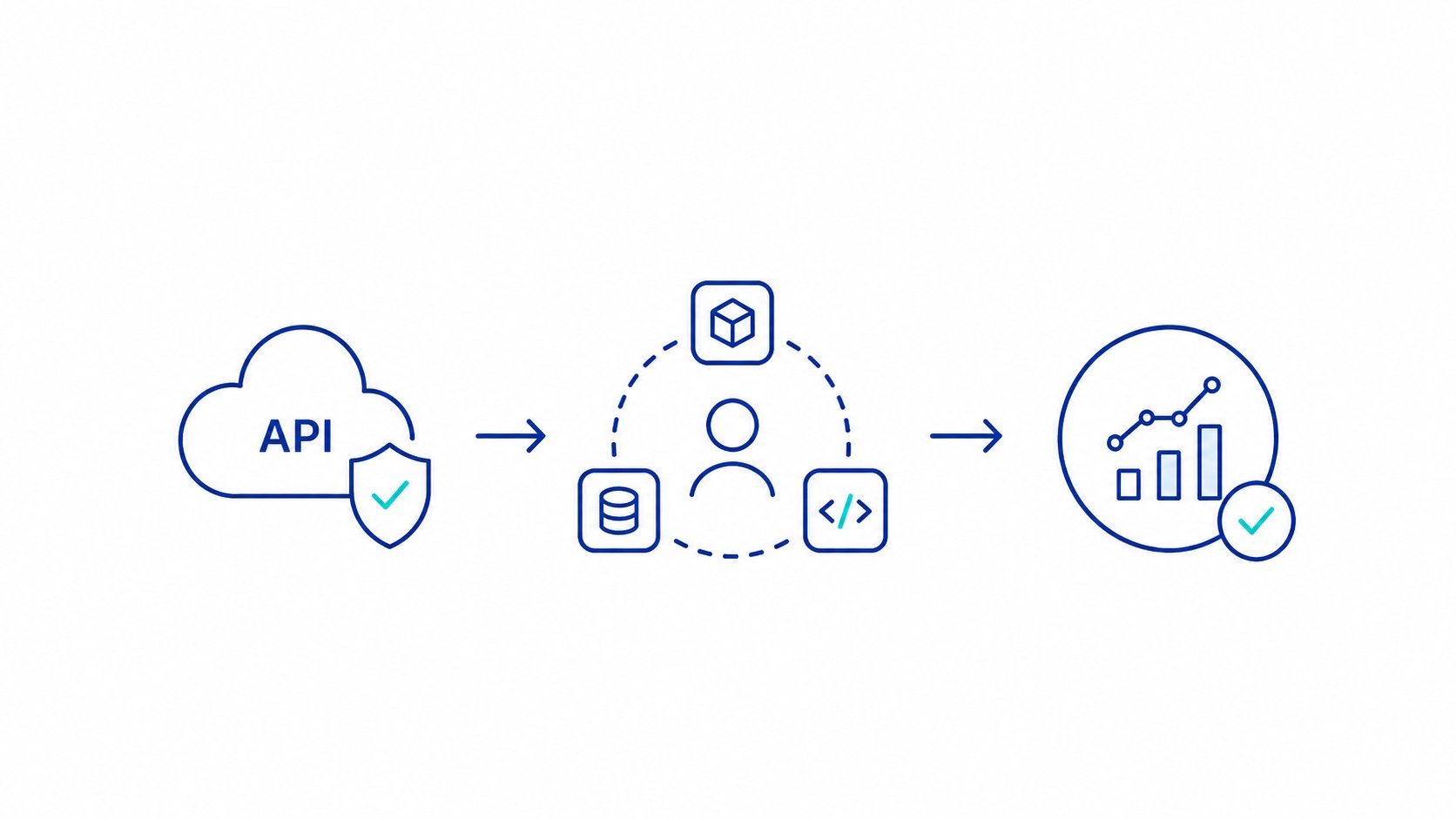
Submitted evidence is processed by an automated validation layer that combines rule-based checks with content extraction methods. Its purpose is to confirm whether the input matches the expected format, context, and structural requirements before moving to the next stage. This layer sits between raw submission intake and task approval, helping normalize evidence such as screenshots, uploaded media, or structured request payloads before they affect scoring, reward flow, or final status.
Typical validation stages include:
A simplified flow can be described as:
Evidence -> Extract -> Normalize -> Validate -> Confidence ResultFor image-based evidence, the system may extract visible text first, then compare identifiers such as account names, phone numbers, task codes, aliases, order references, or expected platform markers against the submitted record. The validation result can then be returned in a structured object for review or queue handling.
{
  "evidence_type": "image",
  "ocr_text": "SAMPLE OCR CONTENT - REFERENCE MASKED",
  "validation_score": 0.91,
  "status": "Processing"
}
This layer improves consistency at scale, reduces manual review, and standardizes evidence interpretation across different input types.
To keep the workflow stable, the platform applies quality-control checks at both the submission and review stages. These checks preserve clean input, reliable validation behavior, and consistent downstream data quality. In practice, quality control is tied to processing states, duplicate protection, evidence completeness, and review isolation, so invalid data does not move directly into the final result set.
Quality-control measures may include:
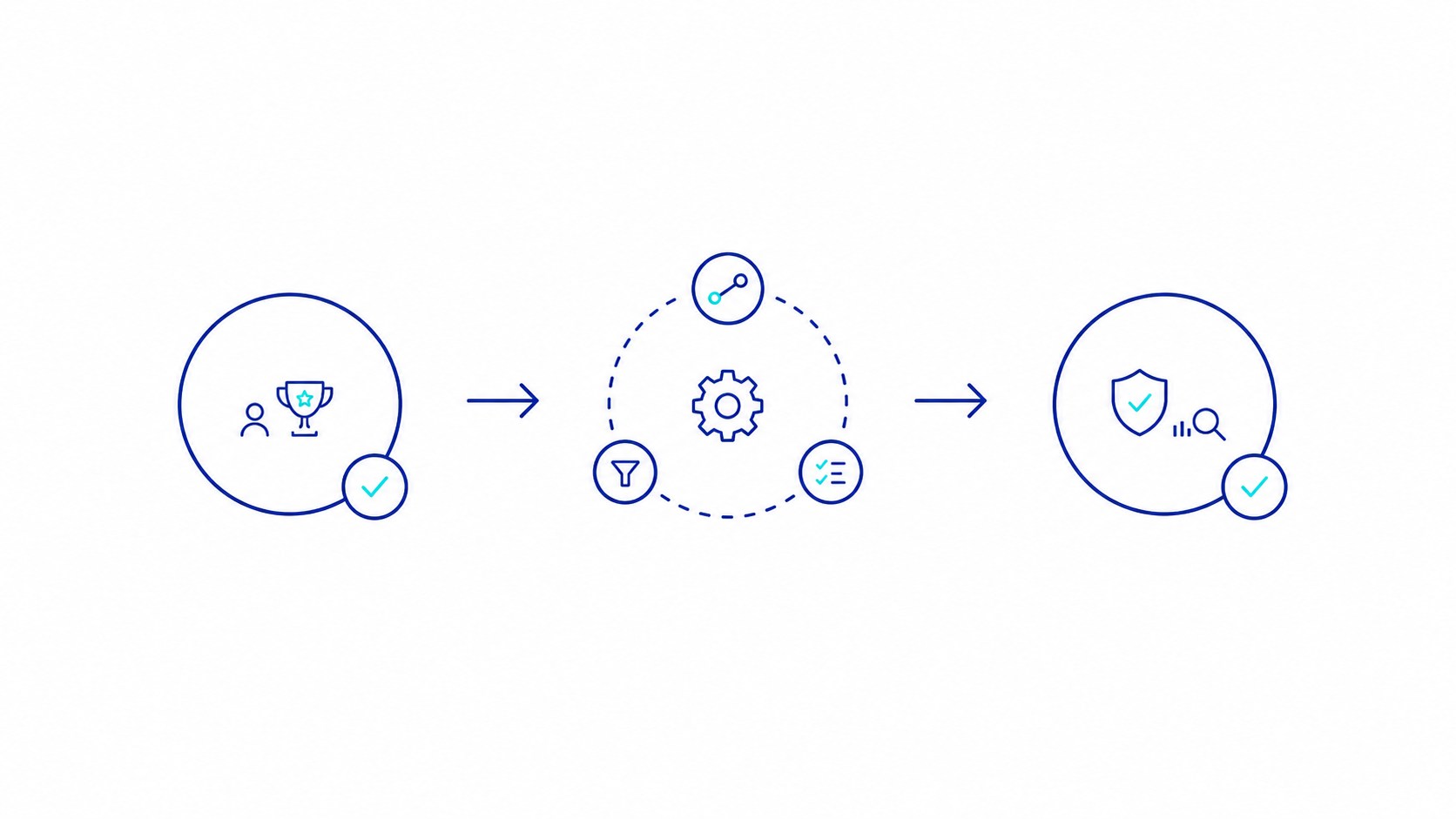
A simplified control path looks like this:
Input -> Validation Check -> Quality Filter -> Review Queue -> Final ResultIn operational flow, invalid or incomplete records can remain in a review state such as Processing or Pending Review, while only approved records move forward to the final result set.
SELECT * FROM submissions
WHERE status = 'Processing'
LIMIT 10;
This workflow helps maintain input quality while keeping the processing pipeline structured, scalable, and reliable for real operational use.
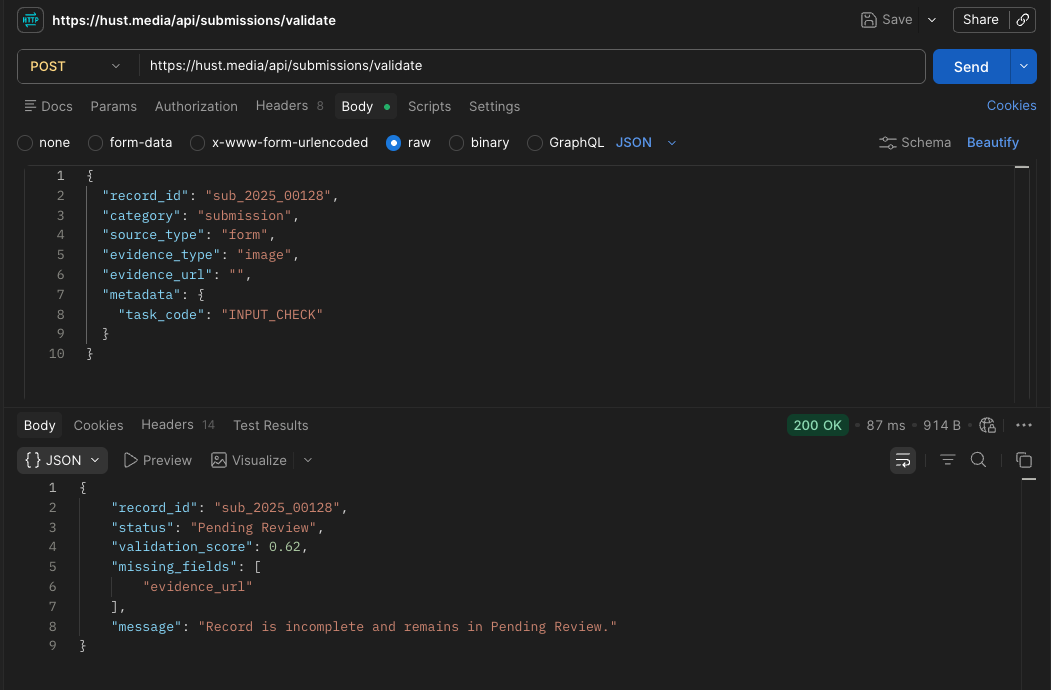
A record with a missing required field can remain in Pending Review after validation. Once the structure is valid, no duplicate is found, and the confidence checks pass, the record can move into Processing and later reach the final result set. The example below shows an incomplete record in Pending Review during validation.
CLOSING NOTES
Reader Value
This model gives readers a practical way to structure workflow validation, apply cleaner quality control, and reduce unstable records before they move deeper into processing. In real projects, that helps keep validation behavior more consistent and supports stable operation across scalable service flows.
Conclusion
Together, these checks create a cleaner validation layer for stable records, safer review queues, and predictable platform operation.